The day after the historic announcement of the inclusion of the Maison Carrée in Nîmes as a UNESCO world heritage site, we take a look back at the cultural and natural treasures in the Occitanie region and in France.
With the addition of the Maison Carée de Nîmes to the list of exceptional sites and monuments classified as UNESCO world heritage sites, the Occitanie region now proudly has 13 properties listed as the prestigious list of world wonders :
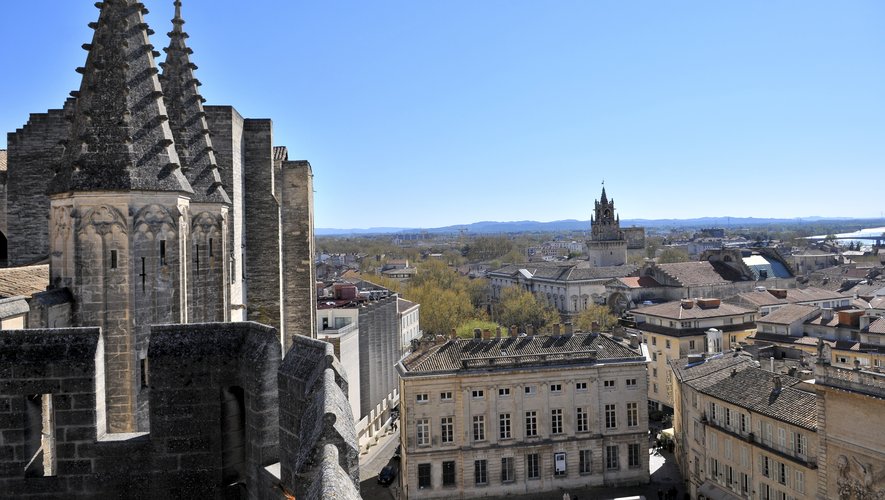
- The historic center of Avignon, including the Palais des Papes, the episcopal complex and the Pont d’Avignon
- Arles, its Roman and Romanesque monuments
- Gard’s Bridge
- The Canal du Midi
- The Causses and the Cévennes, cultural landscape of Mediterranean agro-pastoralism
- The historic fortified city of Carcassonne
- The episcopal city of Albi
- Vauban’s fortifications
- The decorated cave of Pont-d’Arc, called Grotte Chauvet-Pont-d’Arc, Ardèche
- The ancient theater and its surroundings and “Arc de Triomphe” in Orange
- The paths of Saint-Jacques-de-Compostelle in France
- Pyrenees – Mont Perdu
- The Maison Carrée in Nîmes

Unesco classified regional sites
51 sites in France
With its 51 wonders, France has no reason to be ashamed of its cultural heritage, which makes France the third European territory and fourth country in the world to house the most classified sites. It is thus close to Germany (52), behind China (57) and the unbeatable champion Italy (58).
- Basilica and hill of Vézelay
- Chartres Cathedral
- Mont-Saint-Michel and its bay
- Palace and park of Versailles
- Prehistoric sites and decorated caves in the Vézère valley
- Cistercian Abbey of Fontenay
- Amiens Cathedral
- Palace and park of Fontainebleau
- From the large saltworks of Salins-les-Bains to the royal saltworks of Arc-et-Senans, the production of ignigenic salt
- Abbey church of Saint-Savin sur Gartempe
- Gulf of Porto: Calanche de Piana, Gulf of Girolata, Scandola reserve
- Places Stanislas, de la Carrière and d’Alliance in Nancy
- Strasbourg, Grande-Île and Neustadt
- Notre-Dame Cathedral, former Saint-Rémi Abbey and Tau Palace, Reims
- Paris, banks of the Seine
- Bourges Cathedral
- Historic site of Lyon
- Belfries of Belgium and France
- Jurisdiction of Saint-Émilion
- Loire Valley between Sully-sur-Loire and Chalonnes
- Provins, medieval fair town
- Le Havre, the city rebuilt by Auguste Perret
- Bordeaux, Port of the Moon
- Primary and ancient beech forests of the Carpathians and other regions of Europe
- Lagoons of New Caledonia: reef diversity and associated ecosystems
- Pitons, cirques and ramparts of Reunion Island
- Prehistoric pile-dwelling sites around the Alps
- Nord-Pas de Calais mining basin
- Hillsides, Houses and Cellars of Champagne
- The Climats of the Burgundy vineyards
- The architectural work of Le Corbusier, an exceptional contribution to the Modern Movement
- Equipment
- Tectonic hotspot Chaîne des Puys – Limagne fault
- French southern lands and seas
- The Cordouan lighthouse
- The great spa towns of Europe
- Nice, the winter resort city of Riviera
- Volcanoes and forests of Montagne Pelée and the peaks of northern Martinique
In total on a global scale, there are 1,185 sites – 924 cultural sites and monuments and 222 natural sites, 39 so-called mixed sites – which are listed as UNESCO world heritage sites.
They also dream of it in the region…
Several sites in the Occitanie region are also aiming for UNESCO registration. The next file likely to be examined is that of Cathar sentinel castles of Aude. This series of seven fortifications, up to the city of Carcassonne, bears witness to the conquest of Languedoc in the 13th century. In 2017, the Ministry of Culture validated their inclusion on the indicative list of French properties candidates for UNESCO.
The Midi peakin Hautes-Pyrénées, also reached this important milestone in 2022. This pioneering scientific observatory is among the oldest and one of the most remarkable due to its position at the top of a steep rocky peak and its scientific function has never been ceased to be and to renew itself until today.
The Camargue has been part of this indicative list since 2002 but the file has never evolved. It has just been relaunched by a Gard rice farmer, Bernard Poujol, who highlights this vast wetland with varied ecosystems shaped by humans since time immemorial. Only two deltas are today listed by UNESCO: the Danube in Romania and the Okavango in Botswana. The process is just beginning, so the road will be very long.
The mayor of MontpellierMichaël Delafosse, also mentioned the idea during his 2020 campaign, with a dossier focused on the city’s eight centuries of botany and medicine history.
Today, work is finally underway to submit an application for the inclusion of documentary collections linked to medical sciences in UNESCO’s international “Memory of the World” register.
Leave a Reply
You must be logged in to post a comment.