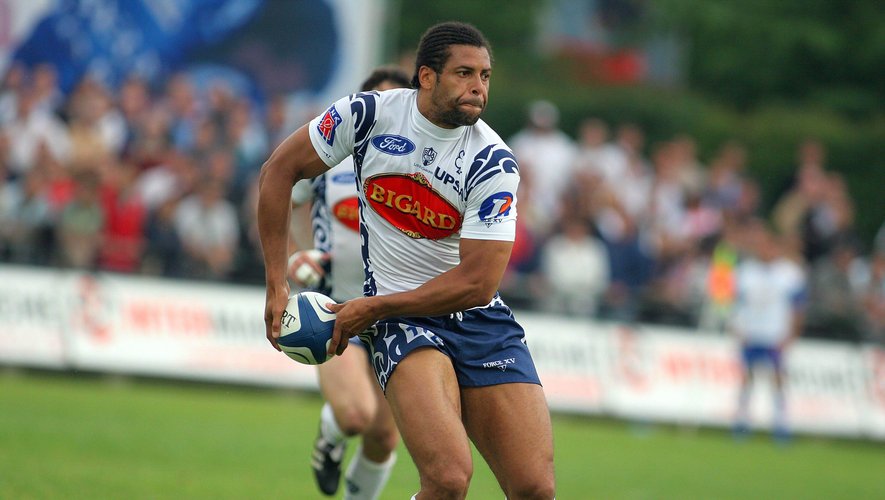
A few days after the appeal trial of Bastien Chalureau for acts of violence “committed due to race or ethnicity”, one of the rugby player’s two victims, Yannick Larguet spoke. In the columns of L’Équipe this Tuesday, he gives his version of the facts and regrets the various comments made by his attacker.
On January 31, 2020, the life of Yannick Larguet found itself linked to that of Bastien Chalureau. A former rugby player, the 43-year-old is a of the two victims who were attacked by Bastien Chalureau in Toulouse. A trial followed in November 2020, during which the French international was given a six-month suspended prison sentence for acts of violence “committed due to race or ethnicity”. After filing an appeal, the current Montpellier player explained again about this evening, on November 14, three years after the events. Refuting the racist nature of the attack, Chalureau expressed himself by admitting to having “always had a problem with violence”. It was a week after this speech that Yannick Larguet decided to speak out in turn, to deliver his version of the facts.
Chalureau spoke three days after his appeal trial, affirming that he had “always had a problem with violence” but maintained that the victims were “lying” about racist remarks made by the Montpellier man.
His words > https://t.co/DTnWrDtQVm pic.twitter.com/RXhRebkzCP
— RUGBYRAMA (@RugbyramaFR) November 17, 2023
In the columns of the Teamthe Franco-Gabonese spoke at length, first affirming his desire to continue fighting to win his case. “What’s the point for me to invent everything? What’s the point?”he insisted. “My son was playing at Stade Toulouse at the time of the events, the club took him in, he no longer wanted to go to training, he was traumatized and was afraid of meeting this person on the pitch. “Dad, is he going to hit me?”” Present at the appeal trial on November 14, Larguet said he was angry after hearing his attacker’s line of defense. “I am disappointed by his version, his way of presenting things, the words he used, his way of trivializing certain points. Between the lines, that means that it was a night fight, between drunk rugby players . That’s not the truth. When you get hit from behind while entering a parking lot, being called stupid, it’s not a fight. It’s the most extreme cowardice. In a fight, there are two people face to face who want to fight. Semantics are important. This is a motivated attack.”
“At 40, being called stupid”
Violent, the one who confided to having “hallucinated” seeing his attacker wearing the blue jersey during the World Cup underlines that the affair goes beyond the mere aggression: “Damn, at 40, being called stupid… I thought about my mother, my father, what I heard when I was younger, in Bourg-en-Bresse, when I played with my brother, that my father was on the edge of the field and that when I crossed the field to score, we could hear: “Catch him, the nigger.” From the age of 6, I saw my father slapping the sidelines to defend his children from racism. Today, I’m an adult. But “les bougnoules, les boucaques”, I’ve heard those words too much. I won’t let that go. The blow hurt me, but it hurt me a hundred times less than the insult. But the insult… I had just lost my mother, my black mother… I said to myself: “You can’t not let this pass, “also thinking about the future of my children.”
This Tuesday, Bastien Chalureau, second line of the MHR and the XV of France was heard before the Toulouse Court of Appeal. An eight-month suspended prison sentence was requested by the attorney general for racist violence against the player.
The trial summary in 3 minutes! pic.twitter.com/nLb730DzUt
— RUGBYRAMA (@RugbyramaFR) November 14, 2023
If he wants to go all the way, it is also because Yannick Larguet does not see Chalureau as someone sincere. For example, he regrets the fact that the second line never apologized for what he did that evening. “He called me the next day. But at no time did he apologize. He wanted to know how we could work things out, resolve the matter without it getting out. […] I don’t want his career to end. I insist on one point: I deeply believe in second chances. He recognized his problems with violence and alcohol, he worked with a psychologist to evolve. But, for the moment, I am not giving him this second chance, because he has not recognized the racist motive.”
Leave a Reply
You must be logged in to post a comment.